Sunday, 26 September 2021

Smart wind helps in maintaining a high output of power and enable blades to rotate at different heights above the ground


Smart Wind Market


A smart wind energy concept with an innovative dual-use hybrid electrical energy conversion system has been tested. The concept relies on the principle of extending the blades of the wind turbine when low wind levels occur, thereby increasing the swept area and thus maintaining a high output power level. Dual-use wind turbines are not new, but the innovation with respect to wind height and wind speed was a new aspect of the design.

A smart wind power generator concept was studied with an innovative hybrid energy conversion system and variable height blades. The concept combines the benefits of the two. The variable height blade system uses the concept of extending the turbine's blades as wind speeds drop below a preset maximum level, thus enhancing the swept area and thereby maintaining a high output of power. The second benefit from this is that it allows the wind blades to rotate at different heights above the ground. This means that the wind blades are in constant use of the stored energy for the generation of electricity. In addition, it also offers greater capacity to produce wind power than conventional generators.

Some of the other technologies would include sensors for the direction and velocity of wind, or for the rate of wind flow. With the integration of these 2 concepts the ability of the wind turbine to produce electricity would increase. Smart Wind Turbines are designed for ground operation, such as on farms or nearby city centers.

There is a new concept coming out of Europe that shows promise with the development of new wind farms. The Smart Wind Turbine is the development of the concept that is being tested around the world. With this new technology, we could see the evolution of new wind farms being possible within a few years’ time. As a result of the Smart Wind Turbine concept, new wind energy technologies would be available to consumers around the world.


Thursday, 23 September 2021

Demand for Ovarian Cancer Drugs Has Increased Due to Rising Number of Ovarian Cancer Cases


Ovarian Cancer Drugs Market


Treatment for ovarian cancer mostly includes a combination of two ovarian cancer drugs, a taxane (Paclitaxel or docetaxel) and a platinum compound (Cisplatin or carboplatin). Ovarian cancer is cancer that affects the ovaries. It is a relatively rare cancer as compared to other types, though risk is higher among women. Worldwide, ovarian cancer is the seventh most-commonly diagnosed cancer and the eighth most-common cause of cancer deaths in women. Moreover, in Mexico, around 4700 new cases of ovarian cancer are diagnosed per year and it represents the second cause of gynecological cancer mortality with more than 2700 deaths.

Ovarian cancer is an important cause of gynecologic cancer-related deaths. Thus, there is an increasing demand for ovarian cancer drugs worldwide. Surgery is the frontline treatment for ovarian cancer, recommended primarily when the vast majority of the cancer or affected tissue can be removed successfully. Ovarian tumors are of three types, such as stromal tumors, germ cell tumors, and epithelial tumors. The risk of developing ovarian cancer gets higher with age. Most ovarian cancers develop after menopause. Half of all ovarian cancers are found in women 63 years of age or older. Ovarian cancer is rare in women younger than 40.

Commonly used ovarian cancer drugs are DOXIL (Doxorubicin Hydrochloride Liposome), Adriamycin RDF (Doxorubicin Hydrochloride), Clafen (Cyclophosphamide), Doxorubicin Hydrochloride, LipoDox (Doxorubicin Hydrochloride Liposome), Topotecan Hydrochloride, Hycamtin (Topotecan Hydrochloride), Gemzar (Gemcitabine Hydrochloride), Platinol-AQ (Cisplatin), Gemcitabine Hydrochloride, Neosar (Cyclophosphamide), Paraplat (Carboplatin), Cytoxan (Cyclophosphamide), Evacet (Doxorubicin Hydrochloride Liposome), Doxorubicin Hydrochloride Liposome, Paraplatin (Carboplatin), Platinol (Cisplatin), Cyclophosphamide, Carboplatin, Cisplatin, Paclitaxel, and Adriamycin PFS (Doxorubicin Hydrochloride).

These ovarian cancer drugs are widely used to treat ovarian cancer around the world. Doctors use the chemotherapy drug carboplatin to treat ovarian cancer. Both Olaparib (Lynparza) and Rucaparib (Rubraca) are used to treat advanced ovarian cancer, typically after chemotherapy has been tried.


Orthopedic Prosthetic Devices; Provide Support to a Damaged Bone or Replace Missing Joints or Bones


Orthopedic Prosthetic device market


Orthopedic prosthetic devices are designed to prevent or manage musculoskeletal problems, while orthotics support or straighten weak joints or limbs. Prostheses or prosthetic is a medical device designed to support a damaged bone or to replace a missing joint or bone. The implant is fabricated using titanium alloys and stainless steel for strength and the plastic coating that is done on it acts as an artificial cartilage. Orthopedists use various orthopedic prosthetic devices to provide support to a damaged bone or to replace missing joints or bones.

Most commonly, orthopedists use prostheses for knees and hips, allowing the patients to regain full range of motion, pain-free, in a relatively short amount of time. In December 2020, The United States Food and Drug Administration (FDA) approved the Osseoanchored Prostheses for the Rehabilitation of Amputees Implant System, for those who have transfemoral, or above-the-knee, amputations and who have or are anticipated to have rehabilitation problems with, or cannot use, a conventional prosthesis.

Orthopedic prosthetic devices involves the use of prostheses (artificial limbs) to enhance both the function and lifestyle of persons with limb loss, caused by disease, trauma, or other medical conditions. There are several types of orthopedic prosthetic devices, such as upper extremity prosthetics and lower extremity prosthetics. Upper extremity prosthetics include shoulder prosthetics, elbow prosthetics, and hand prosthetics, and lower extremity prosthetics include hip prosthetics, knee prosthetics, and foot & ankle prosthetics.

Other orthopedic prosthetic devices include sockets, liners, and modular components. There are many reasons why people might require assistive devices such as prosthetics and orthotics. The main difference between prosthetics and orthotics is that while an orthotic device is used to amplify an individual's limb, a prosthetic device is used to completely replace a limb. In short, a prosthesis, or orthopedic prosthetic device, is defined as an externally applied device used to replace wholly, or in part, an absent or deficient limb.

Thioester is widely used in research, biotechnology, nutrition, environmental, industrial, bioorganic and clinical fields


Thioester Market


Thioester (Thioacrystallinum) is produced as a byproduct of fermentation. In biology, they are chemicals having the structural group Rligon(R) -S) -CO wherein they are similar to carapyrates with the carbon in the thioester acting as the chemical bond. They are commonly manufactured as part of a sugar amide mixture and as a precursor of large organic molecules.

They belongs to the sugar cane family of products and is used for many industrial processes. In chemistry, thioesters are organic compounds having the molecular group Rligaceae or the R Group. They are similar to carboxylic esters with only the sulfur component playing the part of the chemical bond in the carboxylic ester. They have been used as a source of food additives and are still extensively used in a number of commercial preparations.

It can be considered as a type of proton exchange polymer, wherein the main roles of these compounds are to prevent the oxidation of alkaline metal salts, to form a substance capable of catalysis, and to catalyze a specific reaction. The major properties of this compound include an ability to polarize and an electro-positive charge. The polarization property of this compound allows it to accept hydrogen ions on its surface. In addition to this, they possesses a remarkable ability to react with any of the general chemical elements to produce further compounds.

It has the key difference of being the only known sugar known so far to interact electrically with a hydrogen ion. This makes the compound highly interesting as it opens up new avenues for the discovery of other, even more, interesting general chemical compounds. It was discovered as a solution in the search for new materials with a wide range of applications in research, biotechnology, nutrition, environmental, industrial, bioorganic and clinical fields. With its extraordinary chemistry, has the key difference of being able to catalyze reactions at a scale that is impossible with sugars alone


Self-reconfiguring modular robot has garnered significant popularity with major applications in automotive, electronics, and precision engineering

Self-Reconfiguring Modular Robot Market


Self-Reconfiguring modular robots or self-moderating modular robots are fully autonomous modular machines having variable geometry. They can be assembled in a semi-automatic manner and vary in shape according to the requirements of the users. The parts of a self-reconfiguring robot are made from polystyrene resin, rubber, and thermoplastic elastomeric resins, which can be easily pieced together if needed to form a complete robot.

In the present day's manufacturing system, most of the parts of most of the industrial units are produced by the use of automated machines that are called self-reconfiguring modular robots. These modular robots have great potential to increase the productivity level of factory employees. This is possible due to the fact that they can work according to the definite instructions given by the engineers and programmers who are operating them. By using some sophisticated programs that are designed especially for self-reconfiguring modular robotic systems, these machines can work according to the changing production line policies and can execute their tasks perfectly without any help.

A self-reconfiguring modular robot is highly useful in several industries that require smooth locomotion in various types of circumstances. These include applications such as mining, construction, and manufacturing, as well as supply chain operations that involve both forward and backward movement. Basically, it is capable of performing both tasks with ease. This is what makes it a great choice for applications that require smooth locomotion in both forward and backward directions. This flexibility is one of the main factors why modular robots have an edge over their counterparts. Since the robots can easily change their shapes, the production process can be fastened to the exact specifications needed by the factory. This allows robots to do tasks that may be tiresome for humans, such as drilling holes and making carts. It also allows factories to have greater control over the robots' movement. The presence of a single unit makes it easy for workers to move the robots from one place to another.

Preimplantation Genetic Diagnosis; Recommended For Mothers with Maternal Age or History of Miscarriage


Preimplantation Genetic Diagnosis Market


Preimplantation genetic diagnosis (PGD) is the genetic profile of embryos before implantation and occasionally of fetuses in women who are planning pregnancy. PGD is often considered in much the same way as prenatal diagnosis. The method involves several steps, with each step used to determine the specific genetic makeup of the embryo or fetus, before determining a procedure that can be used for conception. In most cases, preimplantation genetic diagnosis can be performed for couples who have a high probability of conceiving a certain sex.

There are several reasons why couples choose to do this test. Many couples may find that they have a genetic predisposition for a particular sex, and preimplantation genetic diagnosis can be used to determine if this is true. Other couples who are unsure of their genetic match may also use preimplantation genetic diagnosis to ensure that the pairing of their zygote is truly their own, and not a result of something else. Prenatal and postpartum testing are also available for couples who have a strong chance of having a baby. Prenatal visits can help healthcare provider monitor the health of the patient and the health of the child.

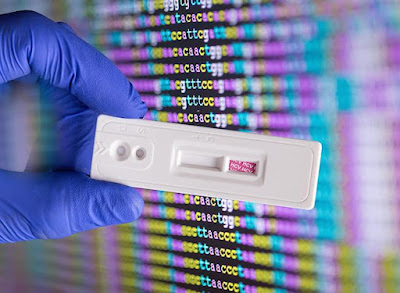
Preimplantation genetic diagnosis allows diagnosis of a genetic disorder in very early embryos before implantation into the uterus. PGD was initially performed using Y chromosome specific DNA amplification for couples at risk for having children with X-linked disorders. PGD is widely used to identify single gene defects such as Huntington disease, sickle cell anemia, Tay-Sachs disease, and cystic fibrosis. In such cases, abnormality can be detected with molecular techniques using polymerase chain reaction (PCR) amplification of DNA from a cell. PGD is recommended for mothers with advanced maternal age or a history of miscarriage

Preimplantation genetic diagnosis (PGD) is performed with in-vitro fertilization (IVF) and occurs prior to embryo transfer, before a pregnancy is established. Thus, with the increasing rate of infertility, the demand for preimplantation genetic diagnosis is also increasing rapidly. According to the Centers for Disease Control and Prevention (CDC), in the U.S., around 6% of married women between the ages of 15 and 44 are unable to get pregnant after one year of trying (infertility). Moreover, around 12% of women aged 15 to 44 years have difficulty getting pregnant or carrying a pregnancy to term (impaired fecundity).


Pyrogen Testing Is Done To Limit the Risks of Febrile Reactions in Animals after Parenteral Administration of Drugs and Is Very Essential


Pyrogen Testing Market


Pyrogen testing is done all over the world, including regions such as Germany, Mexico, and Japan. A pyrogen testing is a very quick way to measure the levels of pyrogens in the animal bloodstream. It measures the tungsten content and gives an indication of what the bacterial level of pyrogens is. The tungsten content will be different if the animal has a cold or flu. Animals may have a higher tungsten content during pyrogen testing if they are taking some medications that alter their state of health. Having a low level of pyrogens is not a health risk but it can cause other conditions.

There are several reasons for individuals to do pyrogen testing. If a pet animal has a urinary tract infection, the vet will want to do a sample of the urine for pyrogen testing in order to make sure that there is no infection present. Another reason could be that the animal is allergic to one of his normal foods or the owners have started feeding them something they are allergic to. Another reason why they might want to do this would be to monitor the animals' weight. Weight loss can be an early sign of illness in an animal and in many instances, once the owner notices weight loss in an animal it is too late to save him because the symptoms usually worsen after a few days.

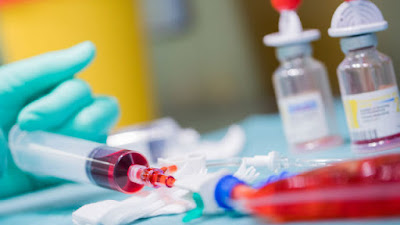
The initial procedure of pyrogen testing is to take a sample of the animal's blood. The blood is then frozen at 4 degrees Celsius. This sample is sent to the laboratory for complete analysis. The second type of pyrogen testing is done using a pyrogen assay is called the peripheral blood mononuclear cells (T cells) in vitro pyrogen test using a negative control. Pyrogen testing is very essential to do since it can detect early but critical symptoms in the animals and can help them from suffering more. In regions, such as Germany, the prevalence of pharmaceutical labs and companies has enabled increased numbers of testing procedures such as pyrogen testing. For instance, according to Germany Trade and Invest, there are around 500 pharmaceutical companies in Germany.


U.S. RFID Tags Market Growth Driven By Increasing Application of RFID in Healthcare Sector

RFID has made a significant impact on the healthcare industry over the past few years. The technology has been instrumental in reducing manu...