Tuesday, 21 December 2021
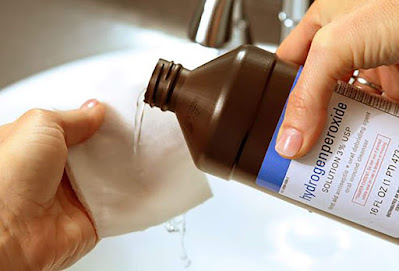
Hydrogen Peroxide Is a Chemical, Which Is Used For Cleaning, Disinfecting, and Bleaching Skin or Hair
Driveline additives are crucial to improve vehicle performance and increase durability
Monday, 20 December 2021
Agricultural Films Are Used Extensively In Order to Control Soil Temperature and Weed Growth
Monday, 18 October 2021
Increase in Emission of Chlorofluorocarbon-11 Reported in Some Regions of East Asia
Thursday, 14 October 2021
Ferric Hydroxide; an Iron Supplement Used To Treat & Prevent Iron Deficiency Anemia
Wednesday, 13 October 2021
Butyric Acid; Is Well-Known to Support Digestive Health and Promote Overall Health
Thursday, 23 September 2021
Thioester is widely used in research, biotechnology, nutrition, environmental, industrial, bioorganic and clinical fields
Thioester (Thioacrystallinum) is produced as a byproduct of fermentation. In biology, they are chemicals having the structural group Rligon(R) -S) -CO wherein they are similar to carapyrates with the carbon in the thioester acting as the chemical bond. They are commonly manufactured as part of a sugar amide mixture and as a precursor of large organic molecules.
They belongs to the sugar cane family of products and is used for many industrial processes. In chemistry, thioesters are organic compounds having the molecular group Rligaceae or the R Group. They are similar to carboxylic esters with only the sulfur component playing the part of the chemical bond in the carboxylic ester. They have been used as a source of food additives and are still extensively used in a number of commercial preparations.
It can be considered as a type of proton exchange polymer, wherein the main roles of these compounds are to prevent the oxidation of alkaline metal salts, to form a substance capable of catalysis, and to catalyze a specific reaction. The major properties of this compound include an ability to polarize and an electro-positive charge. The polarization property of this compound allows it to accept hydrogen ions on its surface. In addition to this, they possesses a remarkable ability to react with any of the general chemical elements to produce further compounds.
It has the key difference of being the only known sugar known so far to interact electrically with a hydrogen ion. This makes the compound highly interesting as it opens up new avenues for the discovery of other, even more, interesting general chemical compounds. It was discovered as a solution in the search for new materials with a wide range of applications in research, biotechnology, nutrition, environmental, industrial, bioorganic and clinical fields. With its extraordinary chemistry, has the key difference of being able to catalyze reactions at a scale that is impossible with sugars alone
Tuesday, 21 September 2021
Protective coatings is very popular for applications such as vehicle rusting, abrasive and harsh chemical exposures, oil-wet state and salt water cure-resistance
Protective coatings are applied to many types of metals to provide a barrier of protection against abrasive or hazardous substances. They are also used to prevent corrosion of the metal, from direct impacts with these materials as well as from ultraviolet radiation exposure.
These coatings protect against corrosion from water, oil, and other liquids. Coatings are generally made from either steel or aluminum with certain additives and can be applied to metals like stainless steel, copper, bronze, and stainless steel forgings. These coatings resist corrosion by forming a protective shield around the surface, which stops the material from being compromised. This is done by incorporating anti-corrosion additives into the protective layer to prevent the additive's molecules from bonding to the corroded metal, thereby preventing corrosion.
They have numerous benefits. By limiting the exposure of metal to an acidic environment, protective coatings are an easy way to prevent corrosion. Common corrosive agents are diesel, paint, bitumen, tar, and plastics. Certain coatings do not require painting and can instead be applied to metals in a powder form, with the coating then curing naturally over time. For surfaces that do not need painting, coatings such as Teflon-based coatings, polyurethane-based coatings, and certain polyester-based coatings provide a strong barrier against corrosion and are long-lasting.
The coatings contain different additives that include boron, titanium, zinc, and iron. The additives work by providing a layer of protection for the metal by forming a seal that is impervious to corrosion. The most commonly used additives are zinc and titanium. Other additives are usually a combination of zinc and titanium. There are many different forms of protective coatings; some use pigments, and others use additives.
Saturday, 28 August 2021
Polymer Emulsions Find Application in Paper and Pulp, Nonwovens & Textiles, Specialty Coatings, Construction, and Other Industries
Polymer emulsion is mostly a dispersion process of polymerized substances in water. In simple terms, it is a process where the dispersion or separation of a substance from other substance is achieved. In a normal latex rubber, water-soluble material tends to stick together. Polymer emulsions find application in industries such as paper, carpet, adhesives, nonwovens & textiles, specialty coatings, construction, graphics arts, and packaging.
The most common polymer emulsions in the U.S. are SBR, poly(styrene-co-n-butyl acrylate) copolymers, poly(vinyl acetate), poly(acrylates), and poly(ethylene-co-vinyl acetate) copolymers. Polymer emulsions may also contain a type of polymer known as n-type polymers. These types of polymers have a pendant structure. For example, n-type polymers have three pendants, each with a single pendant coming off in the process of polymerization. The most commonly used n-type polymers are butyl, ethyl, and propylene glycol. These polymer particles form a gel when mixed with water. As these gel particles are mixed with a liquid, they will form a liquid emulsion which can then be added to a fluid medium such as a millet.
Polymer emulsions offer several advantages over other emulsions, especially those that utilize silicone or PEG based compounds. The biggest advantage offered by polymerization is that it uses materials that do not include silica, instead including elements which are derived from recycled plastic bottles. This reuse allows polymerization to be more environmentally responsible, as plastics that would be rejected during other manufacturing processes, such as those made of glass, are instead recycled to make acrylic polymer emulsions. It is also important to note that polymers formed from recycled material such as plastic bottles often have contaminants that degrade the properties of the final product, such as acid, which leads to clogging. By using these emulsions, manufacturers are able to reduce the amount of contamination that would otherwise contaminate the finished product.
U.S. RFID Tags Market Growth Driven By Increasing Application of RFID in Healthcare Sector
RFID has made a significant impact on the healthcare industry over the past few years. The technology has been instrumental in reducing manu...
-
RFID has made a significant impact on the healthcare industry over the past few years. The technology has been instrumental in reducing manu...
-
Hydrogen peroxide is used all over the world, especially in regions such as the United States. Hydrogen peroxide is an inexpensive natural c...
-
Microhydro-Energetic systems, also called microhydro-electric systems, are mainly refers to plants or large-scale systems, which are locate...